
The actual physical practice of creating, for me, feels like a threshold between motherhood and art. In this liminal space I’m not trying to make people like my art or even feel something towards me. Rather, it’s where I unlock the trapdoor inside myself behind which I keep all the hidden things I know to be true. The goal of creation is, for me, to be pulled into that liminal space and to dwell within the flow of it. It’s 𝘩𝘦𝘳𝘦 where I discover who I am and what I think. 𝘏𝘦𝘳𝘦 where I grapple with questions and sit in the bewilderment of unknowing. 𝘏𝘦𝘳𝘦 where the thoughts too tender for this world can live.
If you look at the etymology of the word threshold, the first part of the word, 𝘵𝘩𝘳𝘦𝘴𝘩, comes from the old English: therscan, 𝘵𝘰 𝘵𝘩𝘳𝘦𝘴𝘩, meaning 𝘵𝘰 𝘵𝘳𝘦𝘢𝘥, 𝘰𝘳 𝘵𝘳𝘢𝘮𝘱𝘭𝘦 like the sifting of grain by stomping or beating. The second part of the compound, 𝘩𝘰𝘭𝘥, originally meant 𝘢 𝘱𝘭𝘢𝘤𝘦 𝘰𝘧 𝘳𝘦𝘧𝘶𝘨𝘦 or 𝘢 𝘩𝘢𝘷𝘦𝘯.
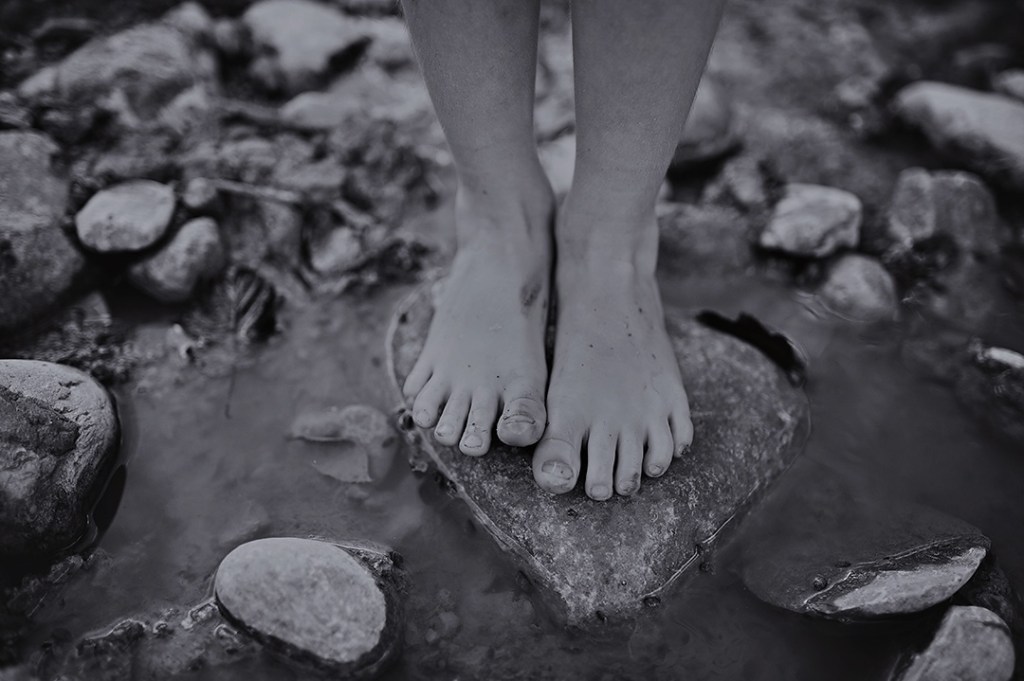
I vacillate between feeling contented in my role as a mother and stifled by not being able to tend to my creativity as the need arises. I straddle the divide between mother and creative, standing with one foot on either side of the threshold—never fully embodying either role.
In our culture we’re told to consummate instead of contemplate, produce instead of ponder. Unless we’re being paid, penning words to paper or spreading paint on canvas isn’t valued as a constructive use of time. Our identities are reduced to 𝘸𝘩𝘢𝘵 𝘸𝘦 𝘥𝘰 rather than 𝘸𝘩𝘰 𝘸𝘦 𝘢𝘳𝘦. But 𝘸𝘩𝘰 𝘸𝘦 𝘢𝘳𝘦 is, like creativity, fluid. I’m leaning in to the ideas that it’s possible to live 𝘪𝘯 the flow of creativity, to create without having to qualify, and to be non-productive to the mechanisms of North American society. There aren’t many things in our culture that we hold sacred, but I think the process of art—not the commodification of it—is something worth sanctifying.
The pull towards my children is visceral, but so is my desire to tend to my creativity. Sometimes, I worry that my role as 𝘔𝘰𝘵𝘩𝘦𝘳 gets trampled as I step over to the haven of the empty page; however, I know the opposite is also true. Most often, once I’ve threshed out the minutiae of motherhood on the page I return to my children with a renewed sense of peace, and, in turn, tending to their needs also becomes a place of refuge. I know it’s possible to find the same haven in my life as a mother that I embody in my practice as an artist.
Here’s the thing, I love my children with a ferocity beyond anything I have ever known, but I also love the deepest parts of myself which remain unknown to them. And I think, maybe, this is ok. Writing is, after all, one of the few practices which welcomes paradox, which holds the unsayable and irreducible. At its best, the blank page is a place of bewilderment, and I think this is also true of motherhood. In both places we are called to surrender what we think we know; in both places we must learn the subtle art of letting go.
My friend Joy calls creativity “𝘵𝘩𝘦 𝘮𝘰𝘴𝘵 𝘵𝘳𝘶𝘦 𝘢𝘤𝘵 𝘰𝘧 𝘮𝘰𝘵𝘩𝘦𝘳𝘪𝘯𝘨 𝘰𝘶𝘳𝘴𝘦𝘭𝘷𝘦𝘴.” This rings true to me. When we choose to tend to our creativity with the same gentleness we offer to our children, the beauty we stand to witness is the balm we absorb into our bodies, a balm essential for surviving this world.
Maybe then, creativity isn’t so much a threshold as it is the fulcrum on which we balance both identities: mother 𝘢𝘯𝘥 artist—binaries we cannot move beyond unless we first move through—flowing between identities until they are blurred and indistinguishable from one another. 𝘔𝘰𝘵𝘩𝘦𝘳-𝘈𝘳𝘵𝘪𝘴𝘵. This feels more fluid to me.
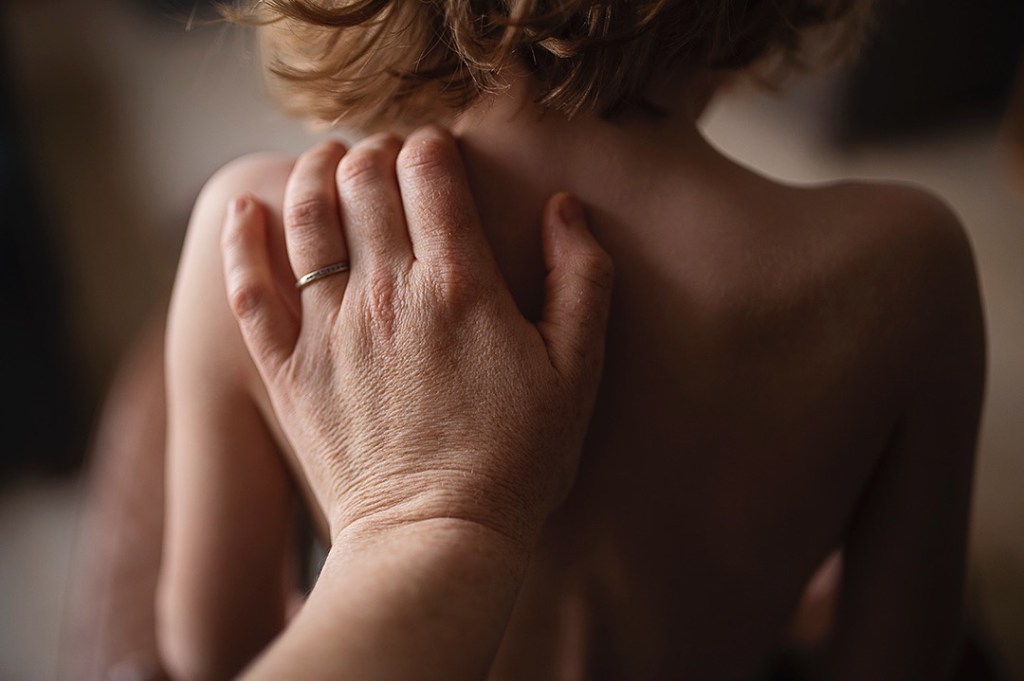
So 𝘵𝘩𝘪𝘴 is where I’m choosing to live: on both sides 𝘢𝘯𝘥 in-between, one hand on the heart of motherhood, the other on the pulse of creativity, holding space to sense the new shape of me as it shifts and changes and emerges new again and again and again.



 sarah graham writes