I once read that at twenty-weeks gestation, a female fetus has already developed a reproductive system containing all of the eggs she will ever produce. If this is true, then a part of me already existed almost seventy years ago: the tiniest matryoshka doll nestled in the womb of my mother in the womb of my grandmother.
So much of what I remember about my grandmother has already slipped away. But I remember her eyes, cornflower blue, passed on to my mama and my second-born daughter, Millie. I remember how she absentmindedly tugged on one of her earlobes and how, as a child, I was equal parts intrigued and horrified that her right earlobe hung three-quarters of an inch lower than the left.
She made the best molasses cookies and always had the kettle boiling for a cup of tea. She loved science and theology, history and literature, and her voracious appetite for books gave her an outlet for these passions. When I was twelve, she handed me a copy of Betty Smith’s A Tree Grows in Brooklyn, and in the days that followed, as I poured over the book’s pages, I learned about acceptance and tenacity and the power of story.
I used to spend Monday afternoons at my grandma’s house while we waited for my sister’s piano lessons to let out. One afternoon, I leaned against the yellow formica countertop of her small kitchen peninsula, intently scraping the last of the Cheez Whiz out of the jar with a butter knife. My grandma fixed her eyes on me. I was still wearing my Catholic school uniform: my bare, freckled knees sticking out between my white knee-socks and my black tartan kilt.
“You’re built like me,” she wheezed, her blue eyes meeting my own. “You don’t have those aristocratic genes your sister inherited from your father. We can trace our lineage back to potato farmers, you know.”
She drummed her gnarled hands on her knees.
“Our sturdy, thick legs are perfect for digging up potatoes.”
I licked the butter knife, unsure of how to respond. She fumbled around on the table for her cigarettes.
“Wide hips come in handy for birthing babies, that’s for sure.”
I think she meant the words as a genuine compliment, but at fourteen I didn’t care about strong legs or birthing hips. With clumsy fingers, I unrolled the waistband of my kilt so the hem fell below my kneecaps.
Sometimes I wonder why we lose so many memories, yet retain the ones we do: small puzzle pieces that fit together to tell the fragmented story of a life.
Our time on earth is made of memories. They are fleeting and ineffable, yet they are also tangible, carnal things experienced through the very real sensations of our bodies. More than our thoughts we are muscle and sinew, blood and bone, hair and teeth. When I try to remember the very first days of motherhood, for example, they don’t just exist in my mind. The memories are imbued with physicality. The searing pain of transition, the tearing of tender flesh, the pins-and-needles let down of milk, the tiny gnawing jaw at my breast, the sweaty, furred head tucked beneath my chin, the milky, sweet smell of the folds of my infant’s neck, the constant thirst, the full body exhaustion, the full heart expansion.
Our bodies won’t always be here. But there are physical parts of us that remain even after we’ve gone back to the earth. The traits my grandmother passed down: my daughter’s blue eyes, my sturdy, freckled-legs—she is still alive in these small ways, just as I was physically alive inside of her decades before I ever existed in this particular form.
We think in terms of binaries and dualisms. We separate our minds from our bodies, our memories from our present moments. Our minds may process our memories, but our bodies feel them. Human life is imbedded in the very fibres of the sensual world in which we live our lives.
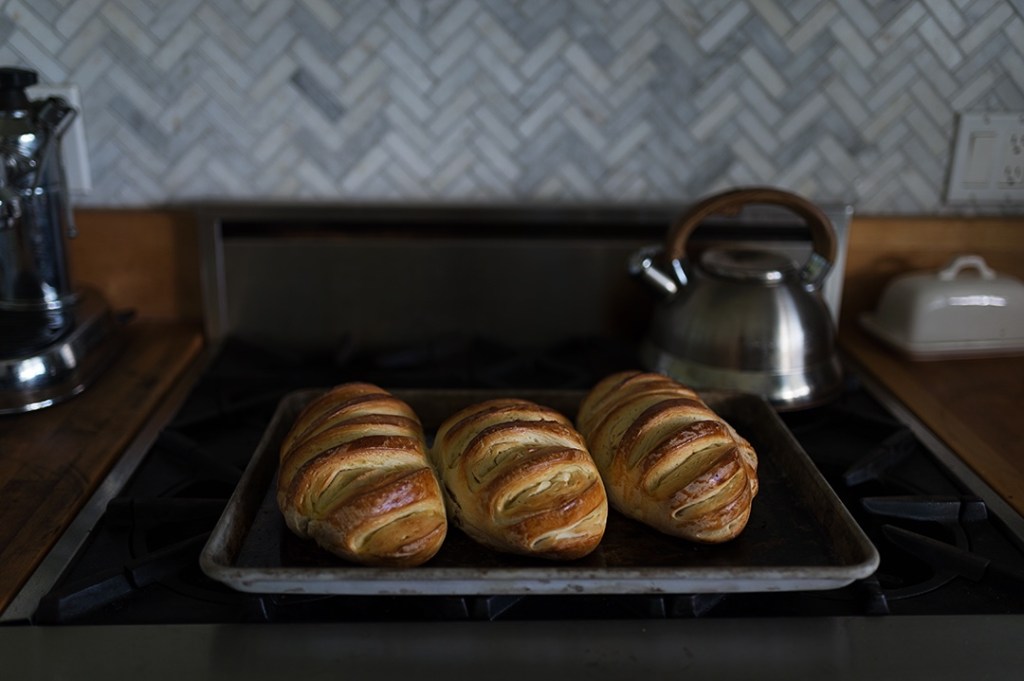
I want it all. The taste of freshly baked bread in my mouth and the memory of its fragrance still filling my senses. The quick brush of my lips against my twelve-year-old’s head as she walks by me in the kitchen, and the felt memory of these same lips on her soft, pulsing fontanel when she was just minutes old. This delight. This pain. This unbridled laughter. These unapologetic tears. This confusing, convoluted, achingly beautiful solid-yet-light thing we call life. This. All of it.
 sarah graham writes